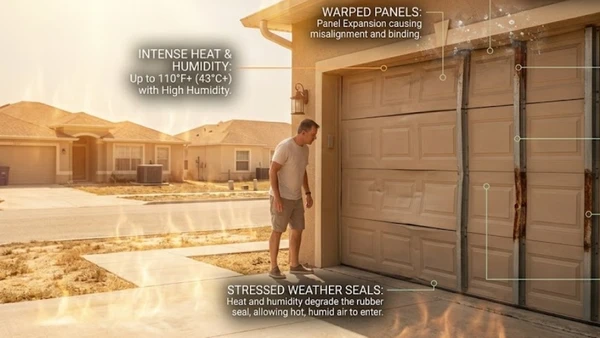
My garage faces west. In July, by about 2 PM, that door is in direct sun and the surface temperature gets genuinely hot to the touch. Hot enough that you don't want to put your hand flat on the steel panel. I've never measured it precisely but I've read that south- and west-facing steel doors in summer can reach 140 to 150°F on the exterior surface.
I didn't think much about what that meant for the door until I noticed one summer that the bottom seal had gone from pliable to almost brittle in a single season. Not old - I'd replaced it two years earlier. It had sat in that heat for two summers and the rubber had hardened past the point of making useful contact with the floor. And the lubricant on my hinges had turned into something closer to a gummy paste than a functional coating. Hot weather evaporates light lubricants, leaves the heavier components of petroleum-based products behind, and what remains collects dust and grit. By July my hinges were running on contaminated residue, not lubrication.
None of it was catastrophic. But all of it was gradual degradation that summer heat and humidity garage door conditions cause consistently, in every climate that runs hot - and in most climates with significant seasonal humidity.
What heat does to the door structure itself
Thermal expansion is the starting point. Steel expands when heated - we're talking fractions of an inch across a 16-foot door panel, but those fractions matter inside a track system designed to tight tolerances. A garage door in summer heat can expand enough that the panels press against the track walls more firmly than in cool weather, creating additional friction. The opener works slightly harder. The rollers experience more lateral pressure. None of this is destructive in a single season on a well-maintained door, but it's progressive across years on hardware that's already worn.
For steel doors specifically, thermal expansion across the full panel width and height can cause slight misalignment at the hinge points where panels meet - the gap between sections changes slightly as the metal expands. You may notice the door runs more noisily in July than it did in April. That's usually thermal expansion changing the geometry the hinges and rollers were calibrated for. Lubrication helps; it reduces the friction that the expansion makes worse.
Wood garage door summer damage is more severe than steel because wood responds to heat and humidity simultaneously. Heat dries wood out and causes it to crack along the grain - UV exposure accelerates this, breaking down the lignin that holds wood fibers together and leading to surface checking and deeper structural cracks. Humidity then works against the heat: moisture enters those cracks, the wood swells unevenly, and you get warping and panel distortion that steel simply doesn't experience. A wood garage door warping in summer isn't a product failure - it's the predictable result of the material being exposed to conditions it needs protection from. A well-maintained wood door with fresh UV-protective finish handles this better; a door that's overdue for refinishing deteriorates faster than most owners expect.
What humidity does that heat alone doesn't
Humidity and garage door rust is the long-term damage story for steel components. The steel panels themselves are coated - galvanized, primed, painted - and the coating protects against moisture penetration as long as it's intact. The problem is the hardware: hinges, rollers, springs, tracks, cable hardware. These have coatings too, but they move. Movement causes micro-wear on coatings at contact points, and in a humid climate garage door environment, moisture finds those micro-wear points quickly.
Springs are the component where humidity-related rust causes the most consequential damage. Torsion springs and extension springs are wound under significant tension - they're doing a serious mechanical job on every cycle. Rust on a spring is a structural issue, not a cosmetic one. A rusted spring has reduced tensile strength at the rust point and is closer to a fatigue fracture than a clean spring. In humid climates like coastal Florida, the Gulf Coast, and the Pacific Northwest, springs that might last seven to nine years in a dry climate may need replacement in five to six. Annual inspection for visible rust - especially in the coil valleys where moisture collects - is how you catch this before a failure rather than after.
Garage door sensor humidity problems are an underappreciated summer issue. Photo-eye sensors sitting 4 to 6 inches off the floor in a humid garage environment can fog with condensation, particularly early in the morning after a warm, humid night. The infrared beam can't pass through a fogged or moisture-covered lens, and the system reads this the same way it reads an actual obstruction - the door won't close. If your garage door is intermittently refusing to close on humid summer mornings and then working fine by midday, fogged sensors are a very likely explanation. Wiping both lenses with a dry soft cloth resolves the immediate issue. Keeping the garage better ventilated - even a small gap in a window or a ventilation fan - reduces humidity buildup and makes this less frequent.
Garage door weatherstripping summer degradation is the third major humidity effect. Rubber seals - the bottom seal, side seals, top seal - are made of EPDM or vinyl compounds that resist moisture reasonably well, but sustained heat combined with UV exposure at the bottom seal and side seals accelerates rubber oxidation. The seal goes from pliable to brittle over a season or two rather than the four to five years a well-protected seal should last. The signs are visible: cracking along the seal surface, sections that feel rigid when you flex them by hand, gaps at the floor or frame that weren't there last year.
The opener in summer heat
Garage door opener motors run warmer in summer ambient temperatures - the motor is working in a hot garage rather than a cool one. On its own this usually isn't a problem for a properly operating door. It becomes a problem when the door has accumulated summer friction issues (thermal expansion, dry hinges, stiff rollers) and the opener is working harder than normal against a door that's harder to move than normal. The two factors compound.
Garage door opener overheating in summer is a real phenomenon on opener models that lack thermal protection or are running doors that need service. Signs: the opener works fine for one cycle and then seems sluggish or fails to complete the next cycle. Wait ten minutes, try again, it works. That's thermal shutdown - the motor got hot enough to trip the thermal protection and needed to cool before it would run again. The door service fixes the underlying cause; the opener is just reporting the problem.
Chain-drive openers run warmer than belt-drive in general, and summer heat amplifies the difference. If you have an older chain-drive opener that's been working fine in cooler months and starts showing heat-related behavior in July, that's worth noting as a factor in any future opener replacement conversation.
Lubricant on the opener rail and drive system also matters more in summer. Heat causes light lubricants to thin further and run off contact surfaces. Heavy grease stays in place better under heat. White lithium grease on the opener rail - specifically the contact surface the trolley rides on - is more summer-appropriate than the thinner silicone sprays that work well for hinges and rollers.
The summer maintenance pass that addresses most of this
Once before peak heat arrives - May in the South, June everywhere else - is the right time for a focused summer maintenance pass.
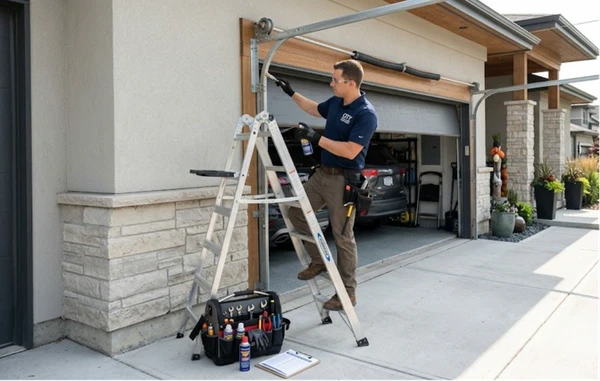
Lubricate with heat-appropriate products. Silicone spray on hinges and rollers because it stays fluid in heat without attracting grit the way petroleum-based products do. White lithium grease on the opener rail and springs. Apply lightly and cycle the door several times to distribute. This directly addresses the thickened-residue problem that heat creates with the wrong products.
Clean and inspect the weatherstripping. Wipe down all seals - bottom, sides, top - with a damp cloth. Look for cracking or rigidity. A seal that's cracking in May is going to be failing by August. Replace it now rather than in the middle of summer when the garage door rubber seal heat damage has progressed to full gap.
Wipe sensor lenses. A dry cloth on both photo-eye lenses before summer humidity season starts takes thirty seconds and prevents the morning-fog-reversal problem before it begins.
Check the spring visually for rust. Look at the torsion spring - or extension springs if you have them - for orange-brown discoloration in the coil valleys. Surface rust that wipes off is fine; pitting or heavy orange deposits need a professional assessment.
Inspect for warping on wood doors. If you have a wood garage door and it's been more than two years since refinishing, check the panel faces for surface cracking or checking (fine-line surface cracks). If the finish is peeling, the wood underneath is unprotected from this summer's heat and humidity. Refinishing now prevents the more significant damage that comes from a full season of unprotected exposure.
What summer heat reveals about problems that already existed
The most reliable thing summer does to garage doors is reveal problems that were building quietly during cooler months. A spring that's been accumulating rust and fatigue stress may have seemed fine all spring but fractures during a summer when the door is cycling more frequently and the hardware is working in elevated ambient temperatures. A roller that was marginally functional in April is definitively failed by July. A seal that was barely holding contact in cool weather is visibly gapped in the heat when the rubber has softened and the door's thermal expansion has changed the geometry slightly.
This is worth knowing because it means summer service calls that feel sudden often aren't - the problem existed before summer revealed it. The practical implication is that a spring inspection and lubrication in May is worth more than the same service in November, because May is when you have the opportunity to address things before they fail rather than after.
DoorFixy handles summer garage door tune-ups including spring inspection, lubrication, seal replacement, and sensor service - the full set of maintenance items that keep a door running through the hot months without incident.