You walk into the garage on a cold morning and the inside of the door is dripping. Or there's a layer of moisture across the steel panels that wasn't there yesterday. The floor near the door is damp. Sometimes there's a smell developing.
It's not a leak. Your roof is fine. The door isn't broken.
What you're dealing with is condensation - and it happens for a specific, predictable reason. Once you understand it, fixing it is usually straightforward.
Why It Actually Happens
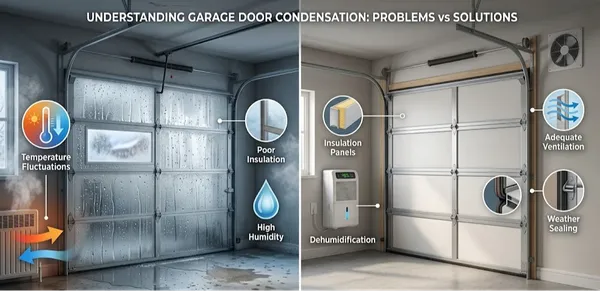
Warm air holds moisture. Cold air can't hold as much. When warm, humid air inside your garage touches the cold surface of a metal garage door, the air cools rapidly right at that surface - and the moisture it was carrying has to go somewhere. It drops out of the air and onto the door.
This is the same reason a cold drink gets wet on the outside on a humid summer day. The glass didn't leak. The air around it just lost its ability to hold moisture the moment it hit that cold surface.
Your garage door - especially a single-layer steel door with no insulation - is essentially a giant cold metal surface for most of the winter. Every time warmer interior air touches it, you get condensation.
A few things make it worse:
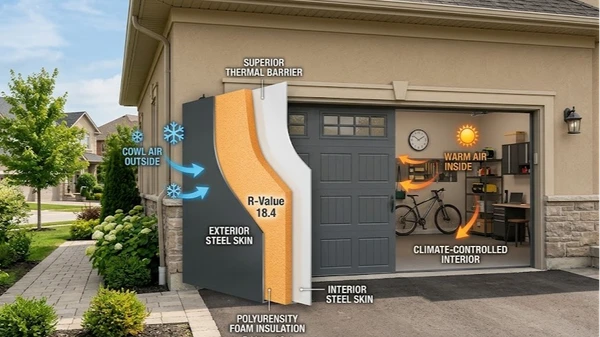
The door has no insulation. An uninsulated single-layer steel door gets as cold as the outside air. The temperature difference between that surface and your garage interior can be 30, 40, even 50 degrees on a cold morning. That's a lot of condensation potential.
The garage has a moisture source. A car that was driven in the rain or snow brings water in with it. That water evaporates as the car warms up, raising the humidity inside the garage significantly. Same thing happens if you store firewood, run a sink, or have any groundwater seeping in.
There's no ventilation. Most garages are sealed tight. Humid air goes in, humid air stays in. Without any way for moisture to escape, it cycles around and keeps hitting that cold door.
The floor is concrete. Concrete is porous and naturally holds moisture. On warm days, it releases moisture into the air. That moisture eventually ends up on the coldest surface in the space - your door.
What to Actually Do About It
There's a spectrum here from cheap and temporary to more permanent and effective. Where you land depends on how bad the problem is and how much you want to spend.
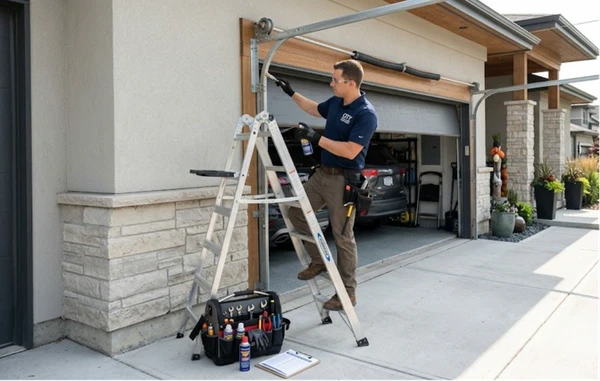
Check the weatherstripping first. If the seals around the door frame are cracked, torn, or compressing unevenly, outside air - often more humid than inside air, especially in summer - is getting in freely. Replacing weatherstripping costs $20–$60 and takes an hour. If you haven't done it in five years, it probably needs doing anyway.
Improve ventilation. A garage with no airflow traps humidity. Adding a roof vent, a wall vent, or even just cracking a window when the weather allows gives moisture somewhere to go instead of straight to your door. This is one of the lowest-cost fixes and genuinely helps.
Get a dehumidifier. For garages where condensation is severe or seasonal, a dehumidifier set to 50% relative humidity makes a real difference. Portable units for a single-car garage run $80–$200. Not glamorous, but effective. Empty the reservoir or run a drain hose and it handles itself.
Insulate the door. This is the most effective fix for condensation caused by the door itself being cold. Either add a DIY insulation kit ($50–$200 in foam panels that attach to the back of existing panels) or replace the door with an insulated one. An insulated door keeps the interior surface warmer, which means less dramatic temperature contrast, which means less condensation.
If you go the insulation kit route, know that it helps significantly but doesn't eliminate the problem entirely - especially in extreme cold. A door replaced with a proper polyurethane-injected insulated door ($1,200–$2,500 installed) solves it more completely.
Seal the concrete floor. A penetrating concrete sealer ($30–$80 for a one-car garage floor) dramatically reduces moisture vapor coming up through the slab. It's a one-afternoon job and it removes one of the main moisture sources in the garage environment.
Park outside after driving in wet weather. Not always practical, but worth knowing: a car covered in snow or rain that you drive into a warm garage dumps a surprising amount of moisture into the air as it melts and dries. On bad winter days, parking outside for a few hours - or laying an absorbent mat under the car - reduces interior humidity noticeably.
When It's Not Just Condensation
Condensation usually clears up once temperatures normalize. If moisture is appearing consistently in dry weather, or if you're seeing water pooling rather than surface dampness, something else might be going on.
Water coming in under the door is a bottom seal or threshold issue - not condensation. The seal compresses and lets rain blow in, or the threshold has deteriorated. That needs a different fix.
Water appearing at the door frame corners is usually a flashing or caulking issue where the door frame meets the exterior siding. Again - not condensation, needs proper sealing.
And mold appearing on the door interior or the surrounding walls means the humidity problem has been going on long enough to create real damage. At that point, ventilation and a dehumidifier aren't enough on their own - the mold needs treatment first.
Most condensation problems are solvable without spending much. Start with ventilation and weatherstripping, add floor sealer, and if the door is uninsulated and old, consider that the door itself might be the right thing to address.
DoorFixy can assess your door and weatherstripping and tell you honestly what's worth fixing versus replacing. Get in touch for a look.