Two very different projects. Same general question - how much is this going to cost me?
Whether you're closing off an old garage door to create a bedroom, home office, or extra living space, or you're cutting a new opening to add vehicle access - both involve real structural work. Neither is cheap. And both have some surprises hiding in the details that most estimates don't mention upfront.
Let's go through both directions separately, because the work involved is completely different.
Part 1: Converting a Garage Door to a Wall
This one comes up constantly when homeowners decide to convert their garage into livable space. The door needs to go. What takes its place is either a plain wall, a wall with windows, or a wall with a standard entry door - depending on what you're building and what local code requires.
What Does It Cost?
The price range here is wide because "closing off a garage door opening" can mean very different things.
| What You're Doing | Estimated Cost |
|---|---|
| Garage door removal only | $50 – $200 |
| Basic framing + drywall (interior wall) | $1,000 – $3,500 |
| Full exterior wall with siding + insulation | $3,000 – $7,000 |
| Adding a standard entry door | $700 – $2,000 |
| Adding windows | $500 – $2,000 per window |
| Permits (varies by location) | $300 – $1,000 |
So for a full conversion - door out, proper insulated exterior wall in, maybe a window or entry door added - you're realistically looking at $3,500 to $10,000 depending on your area, the finishes you choose, and whether the exterior needs siding to match the house.
The low end of that range? That's a basic interior framing job in a detached shed or workshop - not a full code-compliant living space conversion. Don't let those rock-bottom estimates mislead you.
What's Actually Involved?
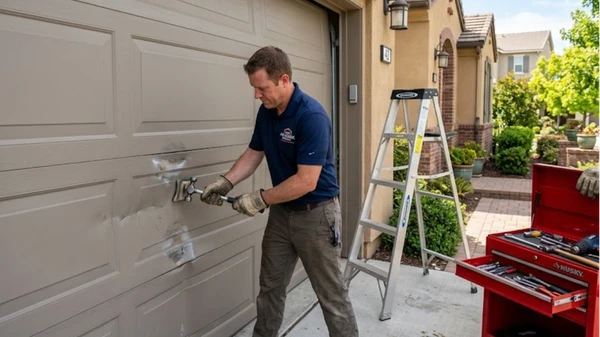
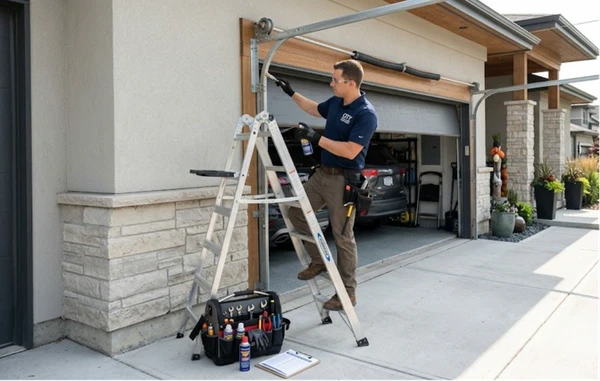
Step one is pulling the old door. The door itself, the tracks, the springs, the opener - all of it comes out. That's the easy part.
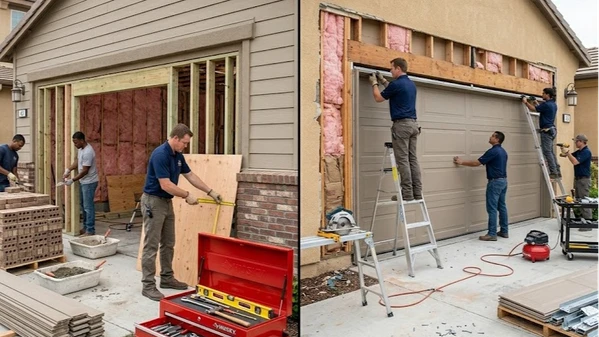
Then comes framing. Someone has to build a proper wall in that opening - framing studs, a pressure-treated bottom plate (because it's sitting on concrete), and a header above. The old garage door header is usually still in place and can often be reused, which saves money.
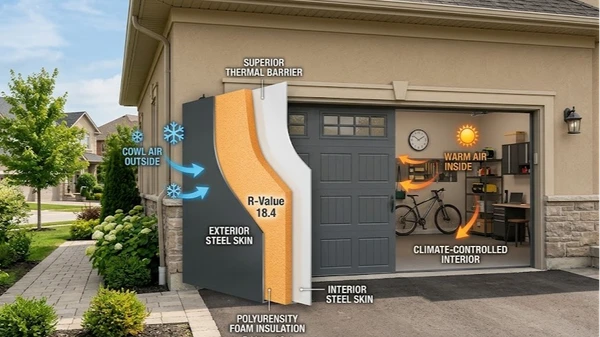
After framing: insulation, then drywall on the inside, then siding or stucco on the outside to match the rest of the house. That last part - matching the exterior - is where costs can spike. If your house has brick, stone, or an unusual siding profile, budget more.
One thing most people forget about: the floor. Garage floors are poured to slope toward the door for drainage. That 1–2 inch slope doesn't work great as a bedroom floor. Leveling it out adds $600–$2,000 to the budget.
Do You Need a Permit?
Almost certainly yes, if you're converting to living space. Most jurisdictions require a permit any time you're changing the use of a space - and code may require at least one window in any sleeping room, plus proper egress. Skip the permit and you risk problems when you sell.
Part 2: Converting a Wall to a Garage Door
This is the opposite scenario. Maybe you've got a detached workshop, a side-entry garage, or a converted storage space - and you want to add vehicle access. That means cutting through an existing wall and installing a new garage door opening.
Structurally, this is more involved than the other direction. You're not filling an opening - you're creating one.
What Does It Cost?
| Work Involved | Estimated Cost |
|---|---|
| Structural engineering assessment | $300 – $800 |
| Cutting the wall opening | $500 – $1,500 |
| Framing + header installation | $800 – $2,500 |
| Exterior siding repair / finishing | $500 – $2,000 |
| New garage door (single, standard) | $800 – $2,500 installed |
| New garage door (double, insulated) | $1,200 – $4,000 installed |
| Permits | $300 – $1,000 |
| Concrete apron / driveway extension | $1,000 – $4,000+ |
Total realistic range: $2,500 to $6,000 for a straightforward single-car opening into a wood-frame wall - more if you're going through brick, dealing with a load-bearing wall, or need a concrete pad poured outside.
What Makes This More Complicated
When you cut a new garage door opening, the wall above that opening needs to be supported. That means installing a proper structural header - often an LVL (laminated veneer lumber) beam - that carries the load of whatever's above it. On a single-story detached garage, this is manageable. On an attached structure with a room above it, the engineering gets more complex and more expensive.
If your wall is load-bearing, get a structural engineer involved before anyone starts cutting. This isn't optional. A header that's undersized or improperly installed can cause serious structural problems - and you won't find out until something shifts.
Also worth knowing: the driveway situation. If there's no concrete apron outside the new door, you'll need one. Getting a car in and out of a muddy opening gets old fast. A basic concrete apron - maybe 10x20 feet - runs $1,500–$4,000 depending on your area and the site conditions.
Which Direction Is More Expensive?
Usually, wall to garage door costs more - or at least has more unpredictable costs. You're creating a structural opening from scratch. That involves engineering, a proper header, exterior finishing, and often concrete work that wasn't needed before.
Garage door to wall is more predictable. The opening already exists, the header is in place, and the work is mostly framing, insulating, and finishing.
That said, if a garage-to-wall conversion involves a full living space buildout - leveling the floor, HVAC, electrical, plumbing, windows - those costs add up fast and can push well past $10,000.
A Few Things Worth Knowing Before You Start
Match your exterior. Whether you're closing an opening or finishing around a new one, getting the exterior siding, brick, or stucco to match the rest of the house matters more than people expect. If contractors can't source matching material, you're looking at replacing a larger section - or painting everything to blend it together.
Check HOA rules. Some HOAs require that homes maintain a certain number of garage doors or a specific streetfront appearance. Closing off a garage door to a plain wall might need approval before you start.
Think about resale. Converting a two-car garage into living space and bricking up the doors can reduce home value in markets where buyers expect garage storage and parking. Not always - depends on your area and what you're converting to - but worth thinking through before committing.
Permits protect you. Nobody loves dealing with permits. But unpermitted structural changes are a real problem at resale - and some insurance claims get complicated when unpermitted work is involved. The $300–$1,000 in permit fees is worth it.
Getting an Accurate Quote
For either project, get at least three quotes from licensed contractors - not handymen, actual general contractors or structural carpenters. The price spread between quotes is often significant, and the cheapest bid isn't always the best choice when there's structural work involved.
Ask specifically:
- Is the header already in place, or does a new one need to be engineered?
- What's included in exterior finishing - does it match my existing siding?
- Is permit pulling included, or is that my responsibility?
- What's the timeline, and will there be any period where the opening isn't weatherproofed?