A police department in St. Paul published a garage security guide this year that included something I hadn't seen in an official document before: a direct reference to the zip-tie-on-the-emergency-release trick as a specific countermeasure against a specific exploitation method. Not vague advice about "securing your opener." A specific physical vulnerability, a specific exploit, a specific fix.
That kind of specificity is useful. So that's what this guide is going to aim for - not "be careful about technology" but actual explanation of how each attack works, who can realistically execute it, and what countermeasure addresses it. Because garage door hacking content tends toward either dismissiveness ("this only happens in movies") or alarmism ("everything is vulnerable"), and neither of those is accurate.
The three actual attack methods - how they work
Fixed-code exploitation
The earliest residential garage door openers used a static code - a set number transmitted by the remote and recognized by the opener. The code was set by dip switches inside both the remote and the opener unit, tiny toggles in an up-or-down position. Eight to twelve of them, which created a code space that sounds large until you realize it's a finite set that can be exhausted systematically.
Two attack methods worked on fixed-code systems. The brute force approach cycled through every possible code combination until one worked. For a 12-switch system, that's 4,096 possible codes - automated devices could cycle through all of them in minutes. The code-grabber approach was even simpler: a device that captured the radio transmission when you pressed your remote, then replayed it later. Since the code never changed, yesterday's captured code opened the door today.
Fixed-code openers are not current technology. They're from the 1980s and early 1990s. But here's the relevant fact: they're still in service in a meaningful number of American homes because openers last a long time and people don't replace them until they fail. If your opener was manufactured before the mid-1990s, you may be running a fixed-code system. If there are dip switches visible on the interior face of the remote, you definitely are.
Rolling code interception (the "RollJam" attack)
Rolling code technology - introduced to specifically defeat code grabbers - generates a new code every time the remote is used. The opener and the remote stay synchronized, so each new code is valid exactly once. Capturing a used code gets you nothing because it's already expired.
The RollJam attack, demonstrated publicly by security researcher Samy Kamkar in 2015, found a clever way around this. The device jams the signal band the remote uses so the opener doesn't receive the code when you press the button. You press again because the door didn't open. The device captures both transmissions. It then releases the first captured code to open the door - so from your perspective, it took two button presses but it worked normally. You leave. The attacker still has your second captured code, which is valid and has never been used.
This is real and it works on standard rolling code systems. It requires dedicated hardware that a determined attacker has to build or acquire and position near your garage before you use your remote. It's not a casual exploit. But it's not theoretical either, and security researchers have demonstrated it against multiple brands.
Current countermeasures from manufacturers include narrowing the timing window in which a captured code remains valid (making the capture-and-return timing harder to execute cleanly), adding additional verification steps, and in some newer systems, requiring codes to be used within a short window of being generated. Not all current openers have these countermeasures. The higher-end LiftMaster and Chamberlain Security+ 2.0 systems have the most robust implementation. If the RollJam attack concerns you specifically, verify whether your opener brand and model has specifically addressed it.
Smart opener network attacks
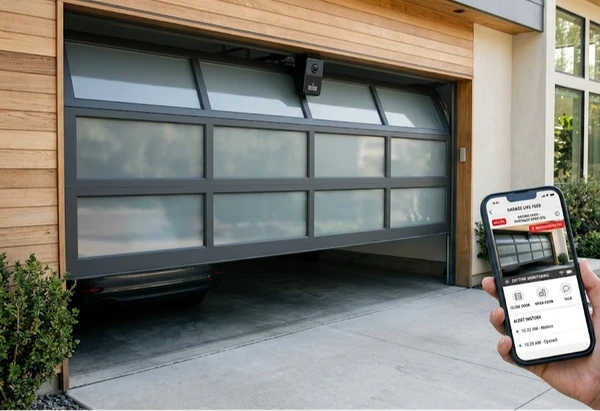
Smart garage door openers that connect to your home Wi-Fi and allow remote operation via app are useful and add genuine functionality. They also add a new attack surface that older purely-mechanical systems didn't have.
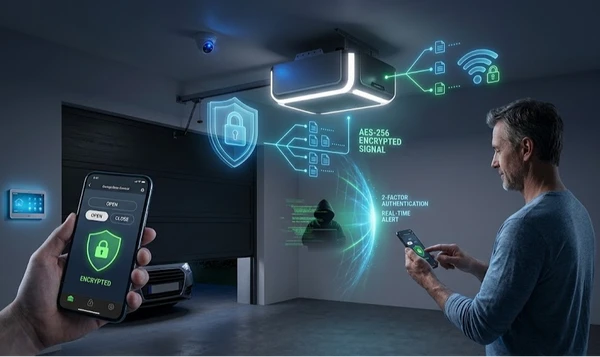
The vulnerabilities are similar to any other connected home device: weak passwords on the associated app account, app accounts without two-factor authentication, outdated firmware with unpatched security issues, and positioning the device on a home network without any segmentation from other devices. A compromised smart opener on an unsegmented network can potentially give an attacker visibility into other devices on the same network - which is a different category of problem than just the garage door.
Remote access attacks on smart openers require finding a valid account credential - typically through credential stuffing (trying username/password combinations from data breaches on other services) rather than attacking the opener protocol directly. The standard network security advice applies: unique strong password, two-factor authentication, firmware updates, and ideally a separate IoT network if your router supports it.
The thing that isn't hacking but gets treated like it is
The emergency release cord exploit gets discussed alongside hacking in a lot of security content, but it's not technically hacking - it's a physical access vulnerability. A thin wire or hook inserted through the gap at the top of the door catches the emergency release lever, disengages the opener, and allows the door to be lifted manually. No code capture. No radio frequency equipment. No technical skill.
It's worth treating separately from hacking because the threat model is different and so is the solution. The zip tie or release shield fix addresses this completely and costs nothing. The fact that this vulnerability exists simultaneously with rolling-code technology is a reminder that the most sophisticated electronic security can coexist with a fifteen-second mechanical bypass - and fixing the fifteen-second bypass is more urgent than worrying about RollJam.
Who is realistically at risk and from what
Thinking through the realistic threat landscape rather than treating all risks as equal is worth doing.
Opportunistic burglars - the majority of residential break-in perpetrators - are not running RollJam devices. They're looking for unlocked doors, visible valuables, and low-effort targets. The physical vulnerabilities (emergency release exploit, unsecured interior door, visible remotes in cars) are what this population exploits. Addressing those is significantly more impactful for most homeowners than worrying about radio-frequency attacks.
Fixed-code systems are a genuine vulnerability to anyone with a code grabber device - these are commercially available, not rare. If your opener is old enough to use fixed codes, replacing it isn't paranoid, it's practical maintenance that happens to close a real security gap.
RollJam attacks require advance preparation, physical proximity at the right moment, and equipment that isn't sold at hardware stores. This is a realistic concern for high-value targets that an organized theft operation might specifically prepare for. For most residential homeowners, it's a background risk worth understanding but not the threat to structure your security decisions around.
Smart opener attacks are real but predominantly enabled by weak passwords and absent two-factor authentication - both of which are entirely user-controllable. The technology itself is reasonably secure when configured correctly.
What actually helps - matched to the specific threats
Replace a fixed-code opener. If yours uses dip switches, this is the most important upgrade on this list. A current rolling-code opener from any major brand costs $150 to $300 and closes the fixed-code vulnerability permanently. It's also quieter and more reliable than anything from the 1980s or early 1990s.
Secure the emergency release cord. Zip tie through the lever hole, or a purpose-made release shield. Under $10, three minutes. Addresses the most-used non-technical access method.
Use strong unique credentials on smart opener accounts. The password on your myQ or Chamberlain account should not be used anywhere else. Two-factor authentication should be enabled. This addresses the most realistic smart opener attack vector - credential stuffing.
Keep firmware updated. Smart openers receive security patches via firmware updates that many people never install. Turn on automatic updates if your opener supports it, or make checking for updates part of your annual garage door maintenance routine.
Don't leave the remote in the car. Switch to a keychain format that leaves with you, or go fully to smartphone-based access. This addresses the car break-in → garage access chain.
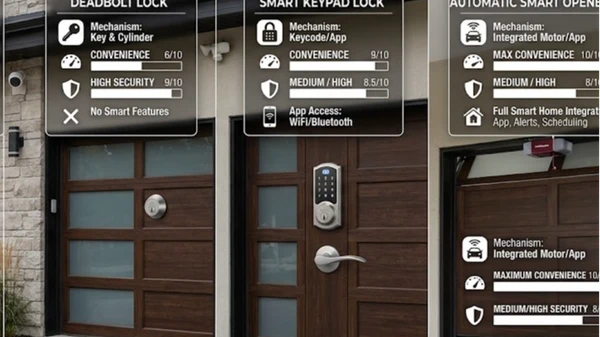
Secure the interior door. Deadbolt, solid core, security strike plate. This is the backstop - even if someone gets through the garage door by any method, the interior door is what keeps them out of your house. Most homes have this door under-secured relative to every other exterior entry point.
If RollJam specifically concerns you, look for openers with documented countermeasures against timing-based replay attacks. LiftMaster's Security+ 2.0 and Chamberlain's equivalent lines have published their countermeasures. Not all brands have been as transparent about this.
The honest summary
Yes, garage door openers can be hacked. The type and difficulty of the attack depends heavily on how old your opener is and whether you have a smart-connected system. Fixed-code systems are the most vulnerable and the easiest to close by replacing the opener. Rolling-code systems are significantly more secure but not entirely immune to sophisticated attacks. Smart openers add network-based risk that standard password hygiene largely addresses.
The non-technical physical vulnerabilities - emergency release exploit, remote in the car, inadequate interior door - represent more realistic risk for most homeowners than electronic attacks and are all fixable quickly and cheaply.
None of this requires becoming an expert. It requires making a few specific decisions and spending a Saturday afternoon on the ones that cost nothing.
DoorFixy can assess your current opener, recommend an upgrade path if yours is outdated, and handle installation - including a security review of your full garage door setup while they're there.