That grinding, screeching sound your garage door makes every time it moves? Nine times out of ten, it's the rollers.
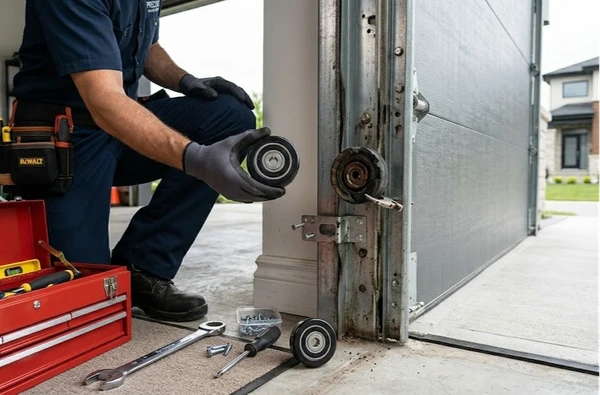
They're the small wheels attached to the sides of the door panels that ride along the metal tracks as the door opens and closes. Cheap plastic ones come standard on most new doors. They crack, wear flat, and start making that sound - usually within a few years if the door gets heavy use.
The good news: rollers are one of the cheaper garage door repairs out there. The parts themselves cost almost nothing. What you're mostly paying for is the hour of labor to swap them out.
Here's the full breakdown.
What Garage Door Roller Replacement Actually Costs
|
What You're Paying For |
Cost Range |
|
Full set of rollers (parts only, DIY) |
$25 – $90 |
|
Professional replacement, all rollers |
$100 – $300 |
|
Single roller replacement (pro) |
$80 – $150 |
|
Premium nylon roller upgrade (full set, pro) |
$200 – $500 |
|
Service call / diagnostic fee |
$75 – $130 |
The national average for a complete professional roller replacement lands around $150–$200 for a standard 7-foot residential door. An 8-foot door needs more rollers - 12 instead of 10 - so budget a bit more.
That service call fee is worth noting. Many companies charge $80–$130 just to show up and diagnose the problem, but typically waive it if you hire them for the repair. So a $100 roller job can effectively cost $180–$230 once the trip charge is factored in - something the base estimates don't always make obvious.
The Roller Types: This Decision Actually Matters
Most guides tell you to just replace what's there. That's usually wrong advice.
The rollers that come standard on most new garage doors are plastic or vinyl - cheap to manufacture, quiet for about a year, then they start cracking and flat-spotting. They last 2–3 years under normal use. Nobody who actually works on garage doors regularly recommends them for a replacement job.
Steel rollers are a step up in durability, lasting around 5–8 years. They're affordable - maybe $2–4 per roller. The downside is noise. Steel wheels on metal tracks are loud, especially on older doors. If you have a bedroom above the garage or anyone who sleeps near it, you'll notice.
Nylon rollers with sealed ball bearings are what most technicians actually install when given a choice. They run quietly, handle the load well, and last 10–15 years with basic maintenance. The part cost is higher - maybe $5–10 per roller - but the labor cost is identical to installing cheap plastic ones. Since labor is 40–60% of the total bill, paying a few dollars more per roller to get ones that last three times as long is just math.
One technician put it plainly: "It takes me the same amount of time to install a bad roller as a good one. Buy the good ones." Hard to argue with that.
How Many Rollers Does Your Door Have?
Standard 7-foot residential door: 10 rollers Standard 8-foot door: 12 rollers Oversized or tall doors: 14–16 rollers
Most companies replace the full set rather than just the ones that have obviously failed. The reasoning is solid - if one or two rollers have worn out, the others are the same age and probably not far behind. Replacing everything at once costs a bit more upfront but saves a second service call within a year or two.
If only one roller cracked because of a specific impact (a car bumped the door, something fell on it), a single replacement makes sense. For general wear across an aging set, go with all of them.
The One Part You Should Never DIY: Bottom Rollers
Most roller replacement is relatively safe for a competent DIYer. The door is heavy and you need to know what you're doing, but the top rollers and middle section rollers can be swapped out without serious risk if you're careful.
The bottom rollers are different. They sit in the bottom bracket at the corner of the door - the same bracket where the lifting cables attach. Those cables are under serious tension. The spring system puts enormous force through them. A bottom bracket under load can release suddenly and cause real injury.
Every experienced garage door technician will tell you the same thing: the bottom rollers are the ones to leave to a professional. The rest are a judgment call based on your comfort and skill level. The bottom bracket is not.
If a company quotes you for roller replacement and you want to save money, ask if you can replace the upper rollers yourself and just have them do the bottom ones. Some companies will work with that.
Signs Your Rollers Actually Need Replacing
Not every noise problem is the rollers. Worth ruling out a few things first before spending money:
The door is grinding or screeching. Could be rollers - but also could be dry hinges or debris in the tracks. Try lubricating with silicone spray first. If the noise persists after lubrication, it's more likely a roller issue.
The door shakes or vibrates while moving. A worn roller with a flat spot causes a rhythmic vibration - you can sometimes feel it through the wall button. That's a dead giveaway.
You can see cracking or chunking on the roller wheel. Just look at them. If the plastic is visibly broken, cracked, or the wheel has a flat side, they need replacing. This takes 30 seconds to check yourself.
The door is slow or struggles to open. Worn rollers add friction. The opener works harder. Sometimes what looks like an opener problem is actually roller resistance.
If the tracks are also bent or the rollers have been riding rough long enough to damage them, track repair or replacement gets added to the bill - that's another $150–$375 depending on the extent.
DIY vs. Professional: The Honest Breakdown
Rollers themselves cost $25–$90 for a full set from any hardware store or Amazon. The job takes about 1–2 hours. If you have basic mechanical ability, the right tools, and you're not touching the bottom brackets - this is DIY-doable.
What DIY gets wrong, usually: not replacing all of them. People replace one or two that look bad and leave the rest. Six months later they're calling a tech anyway. If you're doing it yourself, buy the whole set.
What you gain by hiring a pro: they'll check the tracks, hinges, springs, and cable condition while they're in there. A tech spending an hour on your door will often spot something else that's wearing before it becomes an expensive failure. That incidental inspection has real value - especially on a door that's 7+ years old.
Cost-wise, labor is typically $75–$150 per hour and a full roller job takes 1–2 hours. Add the service call fee and you're at $150–$300 for most residential jobs. Premium nylon upgrades with a full inspection and tune-up push that to $300–$500 - but you're getting parts that should last a decade plus a health check on the whole system.
When's the last time anyone looked at your garage door rollers? If the door is making noise or the opener seems to be working harder than it used to, it might be worth finding out.
DoorFixy replaces garage door rollers with quality nylon parts and always checks the full system while we're there. Same-day service available - reach out for a quote.