One out of every five garage doors sold in North America right now is a carriage style. That's not a trend. That's a track record.
There's a reason these doors have stayed popular through every wave of home design fashion since the 1960s. They bring warmth, detail, and a sense of character that flat steel panels simply can't replicate. They work on farmhouses. They work on Craftsman bungalows. They work on colonials, Mediterraneans, and traditional two-stories. That versatility is rare.
If you're considering one - or just trying to understand what the options actually look like - this guide covers everything.
What Makes a Door "Carriage Style"?
The original carriage house door swung outward on thick iron hinges. It was built to store horse-drawn carriages in the 1800s, and it looked the part - solid wood, heavy hardware, built for utility with a certain rugged beauty to it.
Modern carriage house garage doors don't actually swing out (most of them). They operate on standard overhead tracks like any other sectional door. What makes them carriage style is the visual language: the decorative overlays, the bold hardware, the wood-look finish, and the overall impression that the door belongs to a different, slower era.
Two things define the look above everything else. Overlays and hardware. Get those right and the door reads immediately as carriage style, even from the street.
Overlay Patterns: The Most Important Design Decision
The overlay is the framework of decorative molding applied to the door's surface. It's what gives a carriage door its distinctive character - and where most of your design choices actually live.
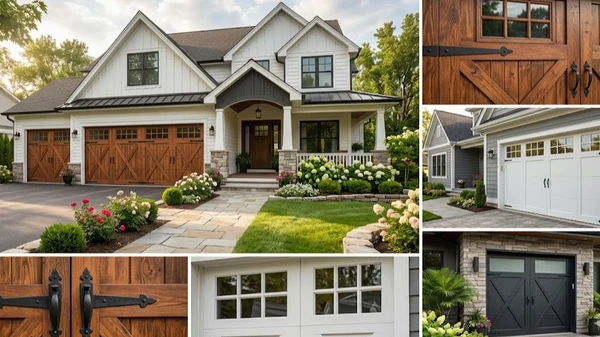
X-Pattern (Crossbuck) - The classic. Two diagonal boards crossing in the center of each panel. Strong, symmetrical, and unmistakably barn-inspired. Works especially well on farmhouse and rustic homes.
Z-Pattern - A single diagonal brace running across the panel, top to bottom. Slightly more relaxed than the crossbuck. Popular on modern barn and Craftsman homes where the look needs to feel clean rather than ornate.
Horizontal & Vertical Rails - Simpler lines, less rustic feel. These lean more transitional - still clearly carriage style, but toned down enough for homes that aren't fully traditional. A good call if your house has a lot of clean architectural lines.
Chevron - A newer direction. V-shaped pattern that gives a carriage door a fresh, geometric quality. Works on homes that want the warmth of carriage style without feeling too period-specific.
Louver Panels - Angled slats built into the door face, reminiscent of coastal and cottage architecture. Striking on Cape Cod, beach house, and Southern traditional styles.
The rule of thumb: the more ornate your home's exterior, the more elaborate the overlay can be. Simpler facades benefit from cleaner patterns.
Materials: Real Wood vs. Faux Wood
This is where the decision gets personal.
Real wood - There's nothing that looks quite like it. Cedar, redwood, and mahogany carriage doors are genuinely beautiful, and they can be stained or painted to any finish. The tradeoff is maintenance. Wood expands and contracts with weather, needs refinishing every few years, and costs significantly more - custom solid wood carriage doors typically run $3,500 to $12,000+ for a two-car set.
Faux wood (composite/steel) - A steel base with a composite overlay and wood-grain texture applied on top. Modern faux wood finishes have gotten remarkably convincing. Clopay's Ultra-Grain® finish and C.H.I.'s wood-tone options genuinely fool people at street distance. The maintenance profile is totally different - no warping, no repainting, no seasonal swelling. Most are insulated. This is where the majority of carriage door buyers land.
Stamped steel - Instead of applied overlays, the carriage design is pressed directly into the steel panel during manufacturing. Cleaner look, lower price point, and very low maintenance. Less dramatic than overlay doors, but a solid choice for homeowners who want the carriage aesthetic without paying premium prices.
Hardware: The Detail That Sells the Look
Decorative hardware on a carriage door is doing a lot of work. Those hinges don't actually pivot - the door doesn't swing. But the right hardware makes the whole door feel authentic.
Strap hinges - Long, flat iron straps mounted on the door face. The more traditional the home, the bolder they can be. Black powder-coated iron is the most common finish.
Handles and pulls - Usually centered on each door section. Ring pulls, bar handles, and classic loop handles are all common. Match the finish to the hinges - consistency here matters.
Color - Black hardware on a white door is a timeless combination. Oil-rubbed bronze works beautifully on warmer wood tones. Matte black on deep charcoal or navy doors has become a popular modern-farmhouse move.
Don't cheap out on hardware. It's a small fraction of the total cost, and it's what people actually notice up close.
Which Home Styles Work Best
Craftsman - Probably the most natural pairing. Exposed beams, earth tones, and horizontal emphasis make Craftsman homes practically made for carriage doors. Z-pattern or horizontal rail overlays in a warm walnut or cedar finish are ideal.
Farmhouse - White-painted carriage doors with crossbuck overlays and black iron hardware. This combination has been everywhere for a reason. It works.
Colonial & Traditional - Raised-panel carriage doors in classic white or cream, with simple hardware and arched window inserts at the top. Clean, symmetrical, and appropriately formal.
Spanish Colonial & Mediterranean - A barn-style overlay in a weathered wood tone, paired with wrought iron hardware, fits the old-world aesthetic perfectly.
Modern Farmhouse (Transitional) - This is where the chevron pattern or clean horizontal rails come in. The goal is warmth without nostalgia - updated carriage character that doesn't feel like a period piece.
Windows: The Finishing Touch
Most carriage house doors look better with windows. They break up the panel, let in natural light, and give the door more visual weight at the top - which is where the eye naturally falls.
Arched-top windows lean traditional and work beautifully on colonial and Mediterranean homes. Square or rectangular panes in a row are cleaner and suit Craftsman and farmhouse styles. Frosted or obscure glass adds light without exposing the garage interior.
A word of caution: don't add so many windows that the overlay pattern gets lost. One row of windows at the top section, two at most, is usually the right call.
Quick Design Idea Roundup
- Classic farmhouse: White crossbuck carriage door + black strap hinges + matching ring pulls
- Warm Craftsman: Cedar-tone faux wood + Z-pattern overlay + oil-rubbed bronze hardware
- Modern barn: Charcoal stamped carriage door + simple horizontal rail + matte black hardware
- Mediterranean rustic: Weathered chestnut overlay + arched windows + wrought iron hinges
- Coastal cottage: White louvered carriage panels + natural wood accents + brushed nickel pulls
Final Thought
Carriage house garage doors earn their popularity. They add depth, warmth, and genuine character to a home's exterior - and they do it across a wider range of architectural styles than almost any other door type.
The key is matching the overlay, material, and hardware to what your house is already saying. A door that fights your home's style feels awkward. One that speaks the same design language? That's what makes a neighbor slow down on the way to their car.
Thinking about a carriage house garage door for your home? DoorFixy can help you find the right style, get it fitted properly, and keep it looking great for years.
More on the DoorFixy blog: garage door styles, brand comparisons, maintenance guides, and real installation advice.