My brother-in-law spent $11,000 on a new garage door last year. Beautiful door. Terrible color choice. The bronze-toned faux wood looked gorgeous in the showroom and sat completely wrong against his pale gray siding, like someone had copy-pasted it in from a different house.
He lives with it now. It's fine. But every time I pull into his driveway I notice it, and I think about how four minutes of better planning would've solved the whole thing.
So let's talk about how to actually choose a garage door color - not just which colors are popular right now, but how to think through the decision so you don't end up in his situation.
The thing most people get backwards
The first move almost everyone makes is opening up a color swatch app and picking something they like. Which is the wrong move. Personal taste is for bedroom walls. Garage doors are exterior architecture - they exist as part of a bigger picture that includes your siding, roof tone, trim color, driveway material, and even what your neighbors have going on.
Your garage door covers somewhere around 30% of your home's visible front face. That's not a small accent - that's a dominant surface. The color you put there either harmonizes with everything around it or it fights everything around it. There's not much middle ground.
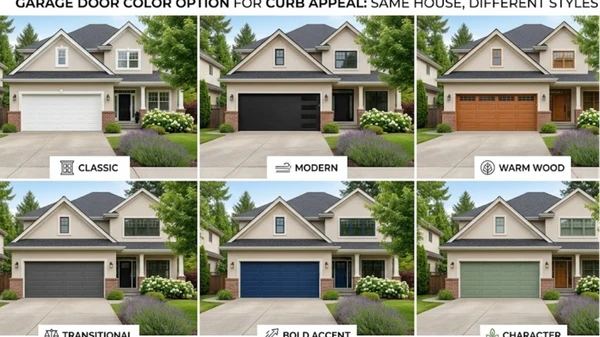
The question isn't "what color do I want?" It's "what color does this house want?" Those are genuinely different questions and most people never bother separating them.
A few things worth settling before you look at a single swatch:
Are you selling in the next couple of years? If yes, think neutral. Not boring, but safe. White, cream, warm gray - they appeal to the widest range of buyers and won't sink a showing. We've seen homes sit longer because a bold garage door color felt too personal for the people walking through. It's not fair but it's the reality of resale.
Does your garage face south or west? Dark colors absorb a shocking amount of heat on sun-facing doors, especially steel. Surface temps can hit 150–160°F on a hot afternoon. This doesn't disqualify dark colors, it just means you need the right door construction - thermal breaks, UV coatings, factory-applied dark finishes. More on that in a minute.
How much of the facade does the garage take up? A single-car garage on a wide house front is a small accent. A three-car garage IS the facade. The bigger the door, the more conservative you might want to be with color.
What actually works, by home style
Traditional and colonial homes. White has been the correct answer here for about 80 years and it still is. Not because it's safe - because it genuinely fits. Symmetrical facades with detailed trim work look sharpest with clean, high-contrast colors. Warm cream works better than stark white if your siding leans tan or warm. Navy and deep green are making moves on colonial styles lately and honestly they're pulling it off. Just make sure the hardware matches - black iron on a navy door, not chrome.
Craftsman and bungalow homes. This is where wood-grain finishes shine. The whole Craftsman design language is about natural materials, exposed structure, warm earth tones. A cedar or walnut faux-wood garage door looks like it belongs. So do deep olive, warm chocolate brown, or a dark weathered sage. What doesn't work here is anything too sleek or cool - flat slate gray, pure charcoal, anything that reads "modern condo." The house will reject it visually.
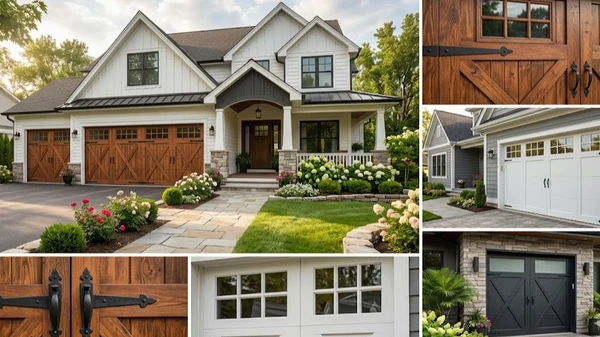
Modern farmhouse. One dominant move and it works almost every time: white door, black hardware. That's it. The crossbuck overlay carriage door in crisp white with matte black handles and strap hinges is basically the mascot of modern farmhouse exterior design. If white feels too bright and you want something warmer, greige is your answer - that gray-beige hybrid that's less stark than white and less cold than gray. The other direction that's working well right now is going full matte black on the door against white board-and-batten siding. It's bold but it's cohesive.
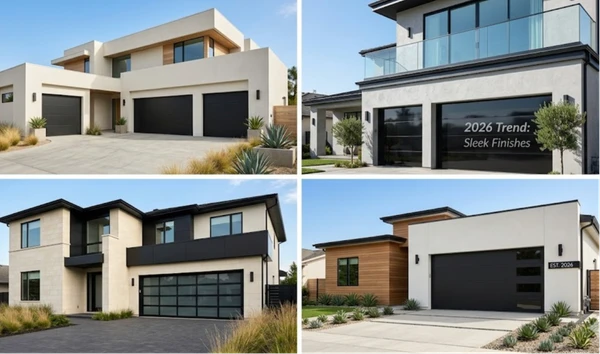
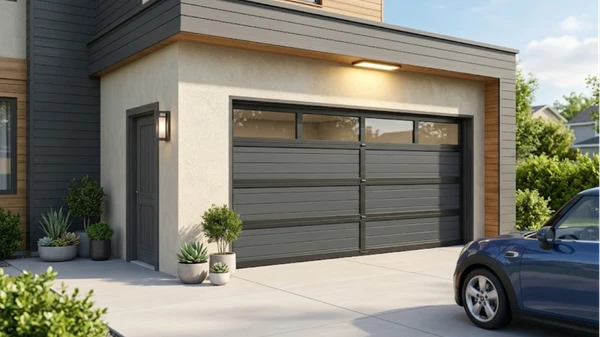
Contemporary and modern homes. Finally, a style that rewards boldness. Flush-panel doors in dark charcoal, deep matte black, or concrete gray fit the clean architectural lines of contemporary homes really well. Dark walnut or espresso wood tone adds warmth without losing the modern edge. Skip the carriage-style overlays here - decorative crossbucks look like a style clash on minimalist facades, like wearing a bow tie with a crewneck.
Brick exteriors. Brick plays well with almost everything which makes it both easy and tricky. Easy because you can't really go disastrously wrong. Tricky because people sometimes try to match the brick tone and end up with a door that just disappears. The combination getting the most attention right now is warm red or brown brick with a matte black door - it's the contrast that reads as expensive and intentional. One thing to avoid: cool-toned gray on warm red brick. The undertone mismatch is subtle but your eye catches it and you won't be able to unsee it.
What's trending in 2026 (and what's quietly leaving)
Flat gray has peaked. It had a great run - a solid decade as the safe modern neutral - but it's starting to feel like a default choice rather than a design choice. What's replacing it isn't dramatic: warmer, earthier takes on the same idea. Think charcoal with brown undertones instead of blue undertones. Storm sky, not parking lot.
Sage and olive green are having a moment that feels sustainable. They read as nature-inspired without being too trendy. They hide dust and pollen remarkably well - useful in allergy season states. And they work on more home styles than you'd expect.
Greige (gray-beige hybrid) is quietly becoming the new neutral. Warmer than gray without committing to beige. Photographs well. Ages gracefully. Low drama.
Matte black is still climbing. It hasn't peaked yet.
Lighter wood tones are trending toward the coastal/transitional look - white oak, driftwood, pale walnut. More relaxed than the deep mahogany finishes that dominated a few years ago.
What's actually fading: stark cool white that reads as clinical. Default beige that matches the siding so closely the door disappears. Anything that was chosen because it was safe rather than because it fit.
One thing people forget at the end
Get physical samples. Not digital renders, not paint chip photos - actual samples of the door color in the material you're buying. Hold them against your siding at different times of day. Morning light and afternoon light do different things to the same color. South-facing doors in afternoon sun look totally different than north-facing doors in shade.
Colors that look great indoors under showroom lighting can read completely wrong on a real exterior in real light. This step takes an afternoon and saves years of quiet dissatisfaction.
|
Home Style |
The safe call |
Worth trying |
|
Colonial / Traditional |
Warm white, cream |
Navy, deep green |
|
Craftsman / Bungalow |
Cedar or walnut tone |
Olive, dark taupe |
|
Modern Farmhouse |
Crisp white |
Matte black, greige |
|
Contemporary |
Charcoal, dark gray |
Matte black, dark walnut |
|
Brick exterior |
Warm charcoal |
Black, deep navy |
|
Stucco / Mediterranean |
Warm tan, white |
Wrought iron black |
Still not sure? White and charcoal have been working for decades. They'll still be working in ten years. When in doubt, land there.
The team at DoorFixy can help you sort through real samples and find a color that actually fits your home - not just one that looks good on a screen.